Understanding Your Comparable Sales Report
The comparable sales average is the benchmark TaxAssessmentIQ checks your assessment against — here's what goes into it and why it's the right number to compare to.
What counts as "comparable"
TaxAssessmentIQ pulls recent sales of nearby, similar properties in your immediate area — the same general standard an assessor or appraiser would use — rather than a citywide or neighborhood-wide average that would mix in very different property types.
Why comparable sales, not the assessed values of neighbors
Sales prices reflect what buyers actually paid in the current market, which is generally considered stronger evidence than comparing to other properties' assessed values, since those assessments could themselves be outdated or inconsistent.
Reading the gap
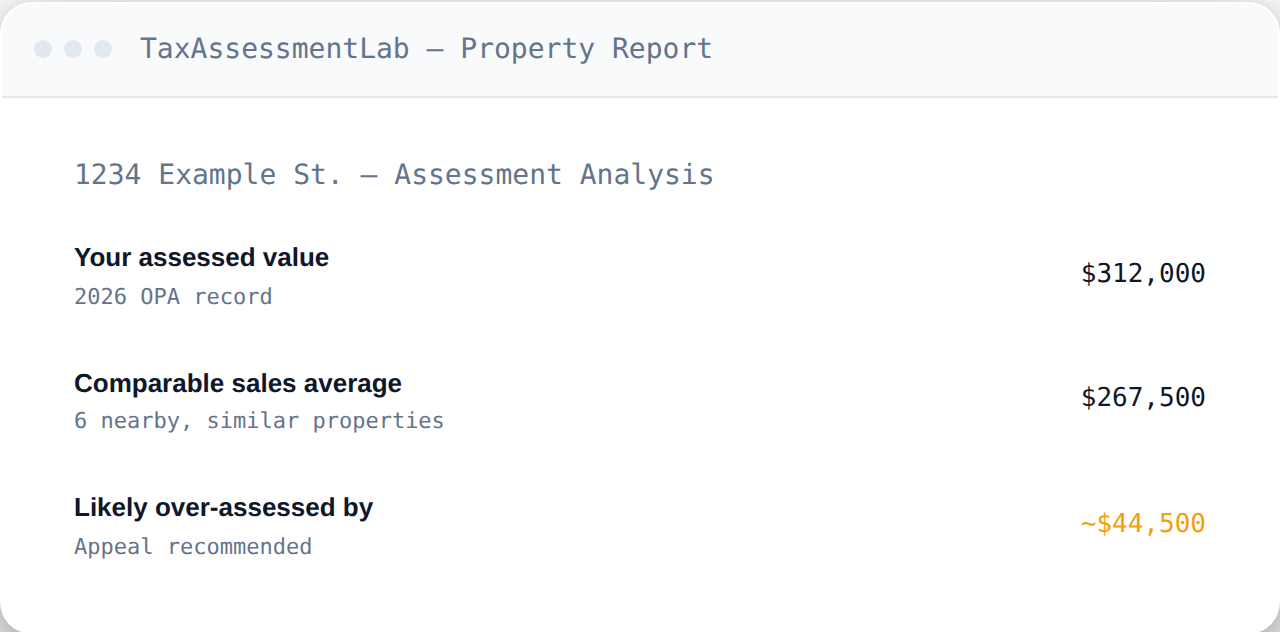
The report shows your assessed value, the comparable sales average, and the dollar gap between them. A meaningful gap — your assessment sitting well above what similar properties actually sold for — is what triggers the "likely over-assessed" flag and a recommendation to consider an appeal.
Seeing the underlying sales
The report identifies which specific nearby properties were used as comparables and why they qualify, so the comparison isn't a black box — you can see the actual evidence behind the recommendation.
Frequently asked questions
How many comparable sales are typically used?
Enough nearby, similar recent sales to produce a reliable average — the report shows exactly which properties were included for your specific address.
What if there aren't many recent comparable sales nearby?
Fewer comparable data points make any average less certain, which is part of why the report shows its work rather than only a single number.
Does a big gap mean I'll definitely win an appeal?
No — it means the evidence looks strong enough to be worth filing. See First Level Review vs. BRT Appeal for how the actual filing process works.